
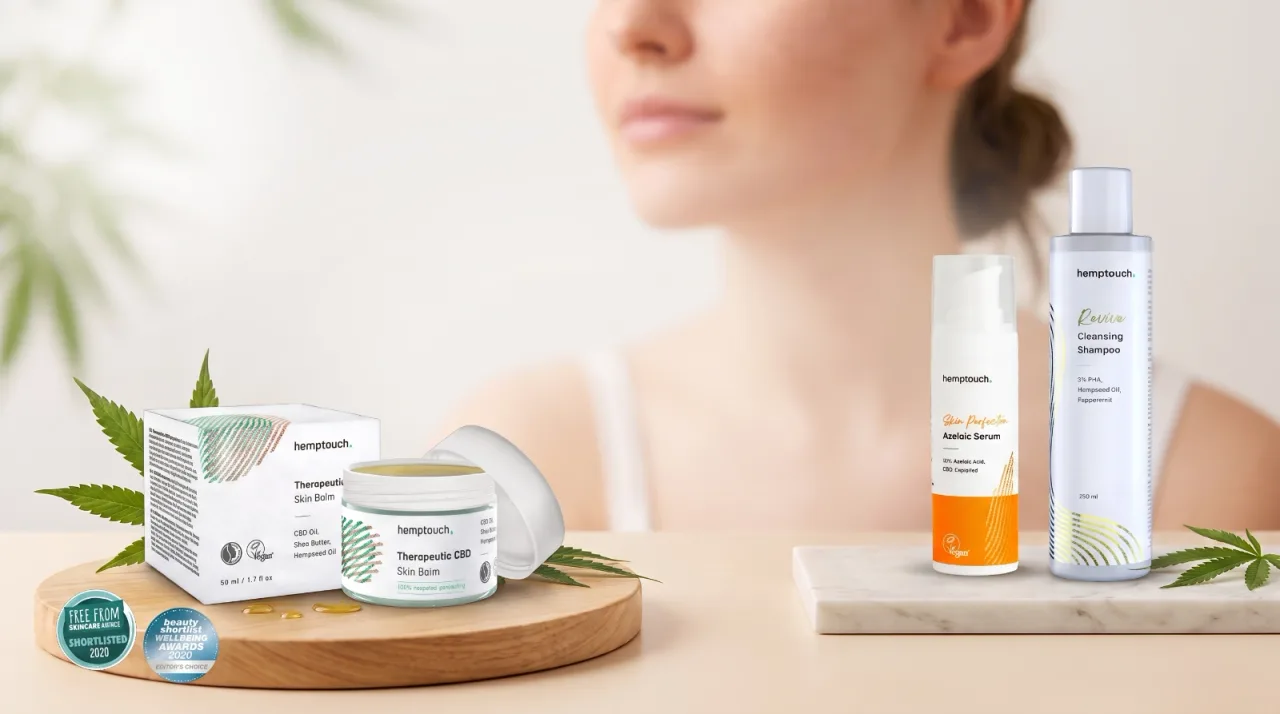
CBD in skin care has long ceased to be a niche topic. What cannabidiol actually does in cosmetics, which product – CBD cream, balm or serum – suits which area of the skin and what you should look out for when buying – summarised factually, with sources.
Note: Our products are cosmetics. We do not give medical recommendations and make no promises of healing. If you have a skin condition, your doctor or dermatologist is the right person to contact.
Why CBD is used in cosmetics at all
Cannabidiol is a fat-soluble plant molecule from the hemp plant. That is exactly what makes it interesting for cosmetics: it can be easily incorporated into oil and emulsion bases and remains stable there. The skin has its own endocannabinoid system – sebaceous glands, keratinocytes and nerve endings carry the corresponding receptors (Bíró et al., 2009). Research on this is ongoing; reliable claims about the effects of individual cosmetic products cannot be derived from it.
Two other points are of practical relevance for you: the formulation surrounding the CBD and the traceability of the raw material. A good CBD care product is first and foremost a good care product.
What research says about the skin
Among other things, sebaceous gland cells have been studied: in a Hungarian cell study, cannabidiol showed sebum-regulating and inflammation-modulating effects there (Oláh et al., 2014); a follow-up study describes something similar for other cannabinoids (Oláh et al., 2016). A small Italian observational study with an ointment containing CBD reported improved quality of life for the participants over three months, without irritation or allergic reactions (Palmieri et al., 2019). Further research is also being carried out into how CBD acts on UV-induced oxidative stress in skin cells (Gęgotek et al., 2021).